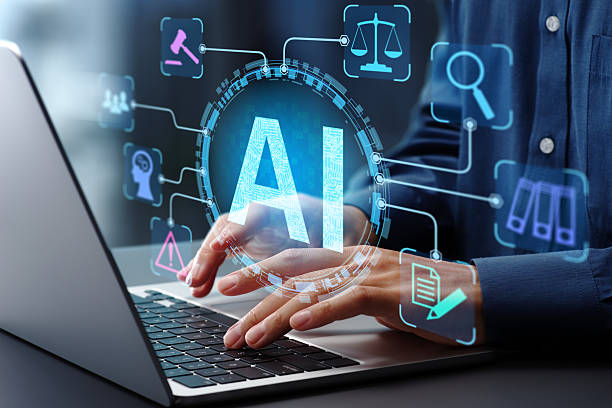
Artificial intelligence is actively reshaping how communications professionals research, develop content, and evaluate results. As the use of artificial intelligence grows, the question of integrating it into the profession has shifted from whether AI belongs in public relations to how professionals can apply it responsibly while still maintaining accuracy, transparency, and ethical standards.
Industry data shows rapid adoption of AI within the professional world with a survey from PR Newswire reporting that 91% of PR practitioners use AI in their workflow. This highlights how PR teams now rely on these tools for writing support, content refinement, and faster delivery of insights as expectations for speed, targeting, and measurable outcomes increase within the field.
Public relations has always depended on large volumes of data with tasks such as monitoring coverage, tracking sentiment, evaluating competitors, and identifying trends requiring constant attention. AI reduces research time by automating these repetitive processes and organizing information in real time, allowing professionals to assess public sentiment and industry movement faster and with greater consistency. Additionally, reduced time spent on manual work lowers costs and allows teams to focus on strategy and relationship building.
Further research highlights how deeply AI is integrated into daily practice. A 2026 Cision report found that 73% of professionals use AI for idea generation, 68% for writing and content refinement, 40% for media monitoring, and nearly one third for reporting. These figures reflect a shift toward targeted, strategic use rather than early-stage experimentation.
While AI tools improve workflow, they also introduce new risks that affect credibility and trust. Consequently, storytelling, media relations, strategic planning, and interpretation of insights depend on human judgment as AI should be used as a tool and not a replacement.
Concerns about credibility continue to influence adaptations, with a PRSSA survey highlighting that 56.1% of respondents worry about loss of human touch in AI-generated content. At the same time, the rise of misinformation and fabricated media increases the need for verification and transparency. Without careful oversight on the use of digital tools, organizations risk damaging trust with stakeholders.
As AI becomes more embedded in public relations, professionals must apply it with clear responsibility. AI should support the work, while humans remain responsible for messaging, fact-checking, and ethical decisions. Strong training and internal guidelines help ensure gains in efficiency do not weaken credibility.